Swimrun arrived in the Tâmega River region in 2020, led by Sérgio Moreira. The athlete stated that his goal was to showcase the “beauty and challenge of this discipline”, which combines swimming and running through “stunning natural landscapes”. The countdown to the 2024 edition has already begun.
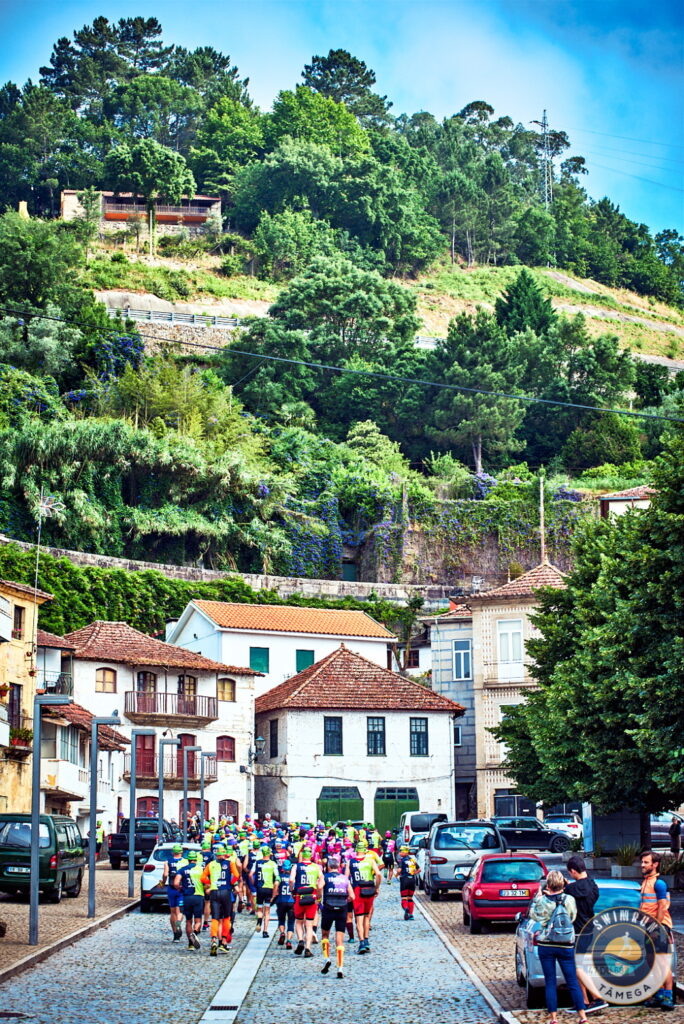
O Swimrun já tinha sido implementado em Portugal, por Bruno Safara, o mesmo que impulsionou Sérgio Moreira – um grande entusiasta pelo desporto, desde que participou no Rockman, na Noruega – a fazer nascer, em 2020, o Swimrun Tâmega, a primeira prova de Swimrun no norte de Portugal. Natural da região do Tâmega, o organizador juntou o melhor de dois mundos: o Swimrun e a sua terra natal, onde é possível descobrir todos os tesouros escondidos, explorar a sua natureza e o património histórico. Todos os atletas participantes terão a oportunidade de passar por praias fluviais, trilhos de montanhas, pela Capela de Rio de Moinhos, pelos antigos moinhos de água e vias romanas. “Este desporto promove o respeito pela natureza”, afirmou. A primeira edição só aconteceu em 2021, face à situação pandémica que se vivia no país. No entanto, tudo foi adaptado e organizado, conseguindo ser a primeira corrida em Portugal Pós-Covid. Contou com a participação de 70 atletas, em que todos já estavam familiarizados com o conceito e já tinham participado noutras provas de Swimrun.
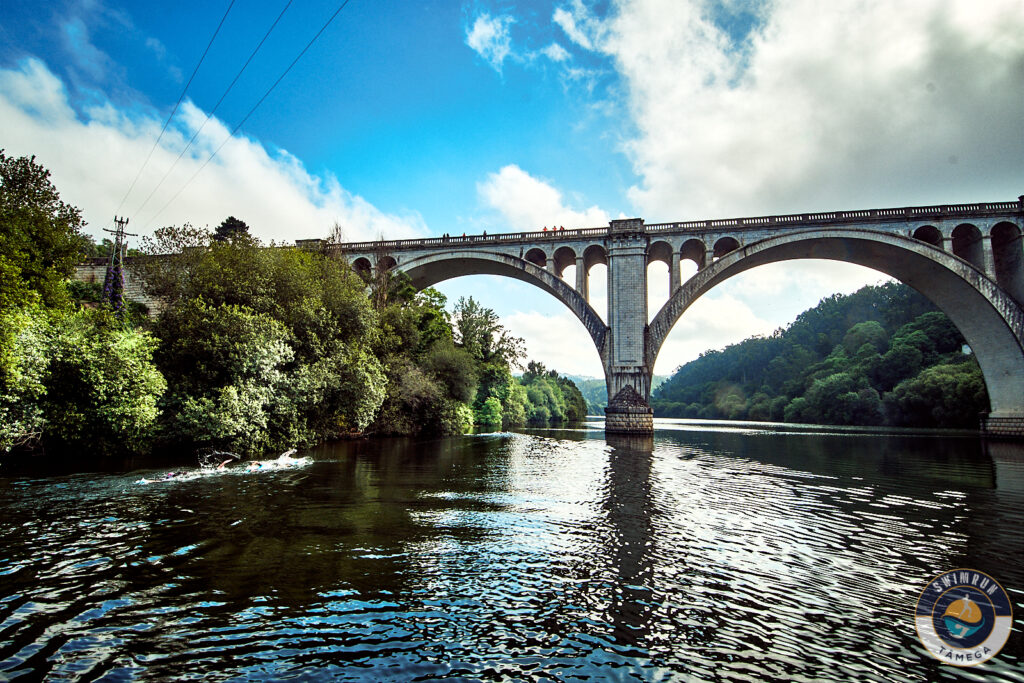
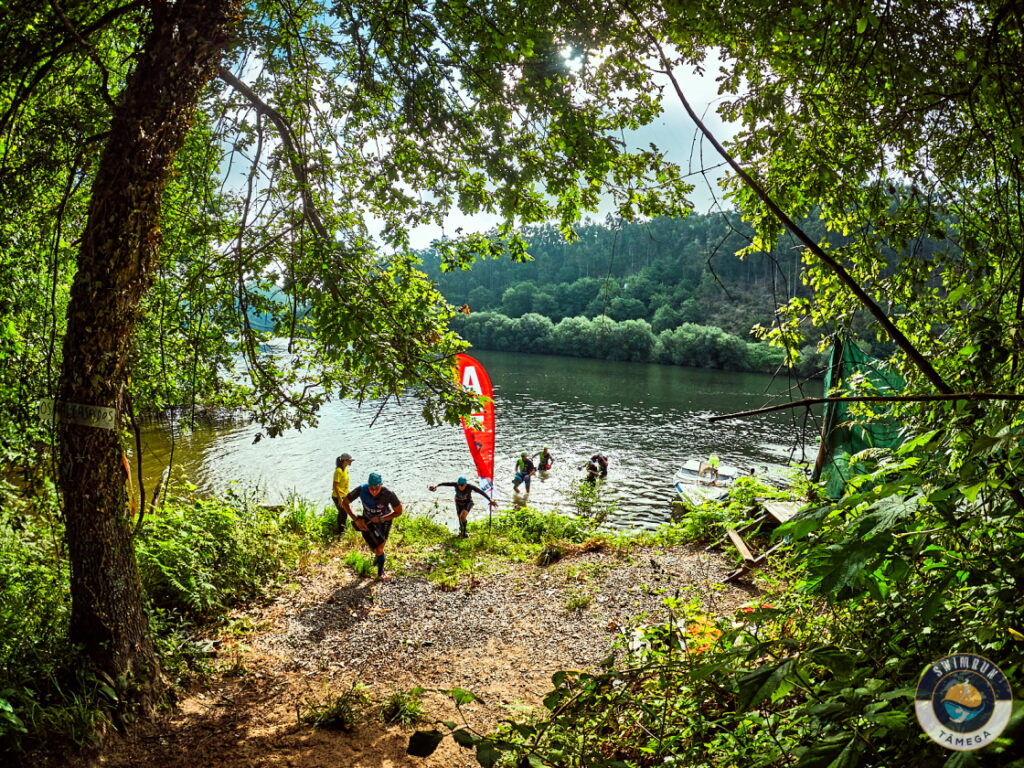
Currently, Swimrun Tâmega features three races with different distances, designed to be accessible to everyone. The “sprint format,” with 17 kilometres of running and two kilometres of swimming, is aimed at those discovering the discipline and does not require intensive training. The intermediate level is the “standard format,” which includes 32 kilometres of running and four kilometres of swimming, requiring some training due to its steeper course. Finally, the “marathon distance” is intended for high-performance athletes who wish to “score points on the ÖTILLÖ World Series circuit.” This race includes 42 kilometres of running and six kilometres of swimming.
Swimrun races can take place either in pairs or individually, although individual participation was only authorised a few years ago and initially limited to shorter courses for safety reasons. Today, it is up to the organisers to decide whether individual athletes may compete in longer distances. At Swimrun Tâmega, two thirds of the athletes compete individually and one third in pairs. European averages show different figures, which, according to Sérgio Moreira, is related to the “difficulty Portuguese athletes face in finding a partner due to the lack of practitioners.”
“Since the conception of Swimrun Tâmega, I have always wanted to include a component focused on youth.” It is worth noting that since the sport was created in 2006, there has never been a serious accident in a Swimrun competition, which demonstrates its safety and accessibility.
This year, Sérgio Moreira succeeded in internationalising Swimrun Tâmega by bringing the ÖTILLÖ Merit Race label to Portugal for the first time. The winners of the “marathon distance” qualify directly for the final of the ÖTILLÖ Swimrun World Championship. All world championship events take place in the Stockholm archipelago — “the exact place where the sport was born.” “It is a bit like the Mecca of Swimrun, a true pilgrimage for all Swimrun athletes.”
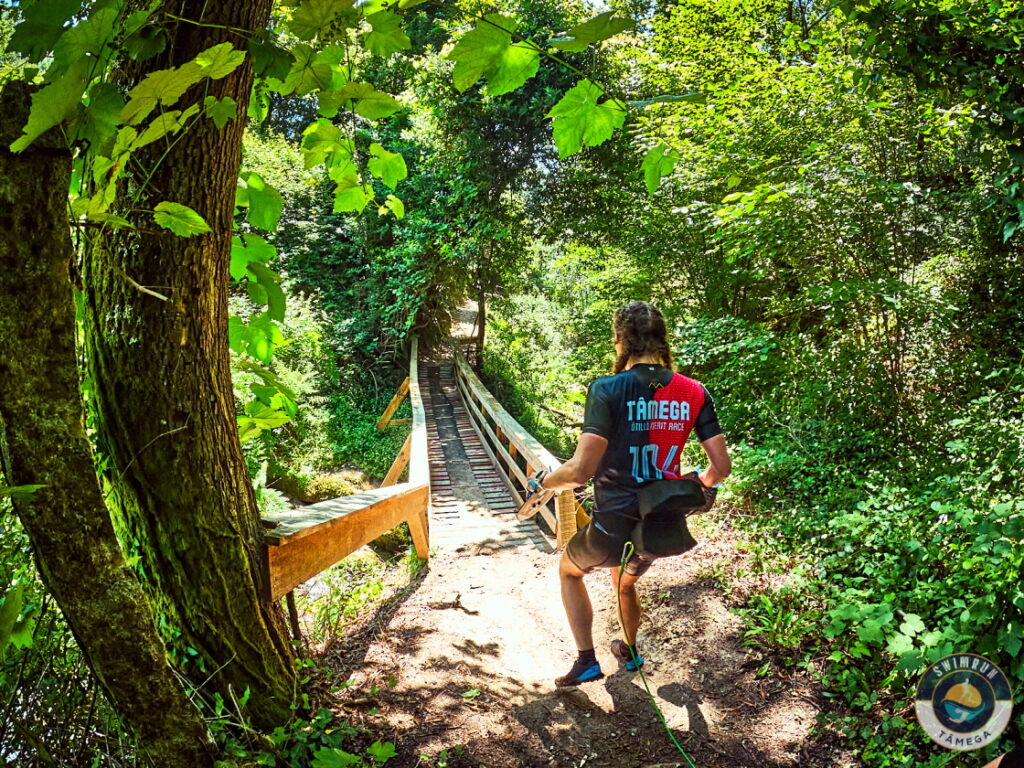
The race also offers a prize fund of €5,000, distributed across the three race formats — Sprint, Standard and Marathon. It is the only race in Portugal to award monetary prizes. Winners competing in the Sprint or Marathon categories receive €150, while winners in the Standard or Marathon categories competing in pairs receive €300. Prizes are awarded up to third place.
A Sport for All Ages
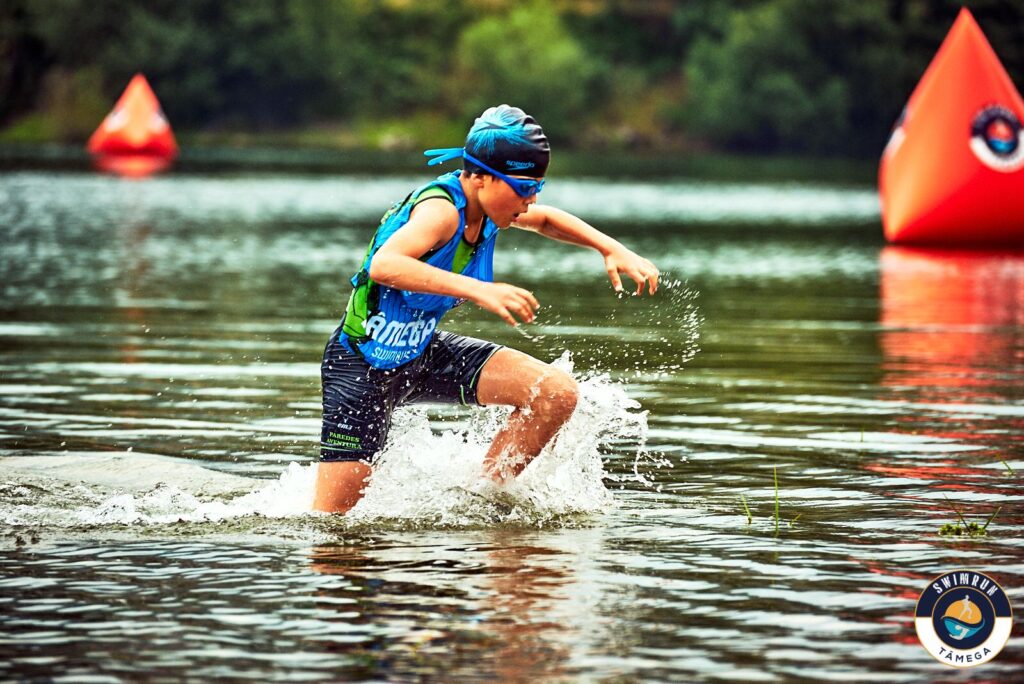
Younger participants are also very much included in this sport, with a strong focus on the inclusion of children and young people from diverse social and economic backgrounds. There are courses adapted to different age groups, starting with the “canard” category (which means “duckling” in Portuguese), for children aged four to six. At this age, the presence of an adult is allowed to ensure safety, on a course that includes 700 metres of running and ten metres of swimming. The distances increase with age, reaching young athletes aged 16 to 18, who already complete five kilometres of running and 700 metres of swimming.
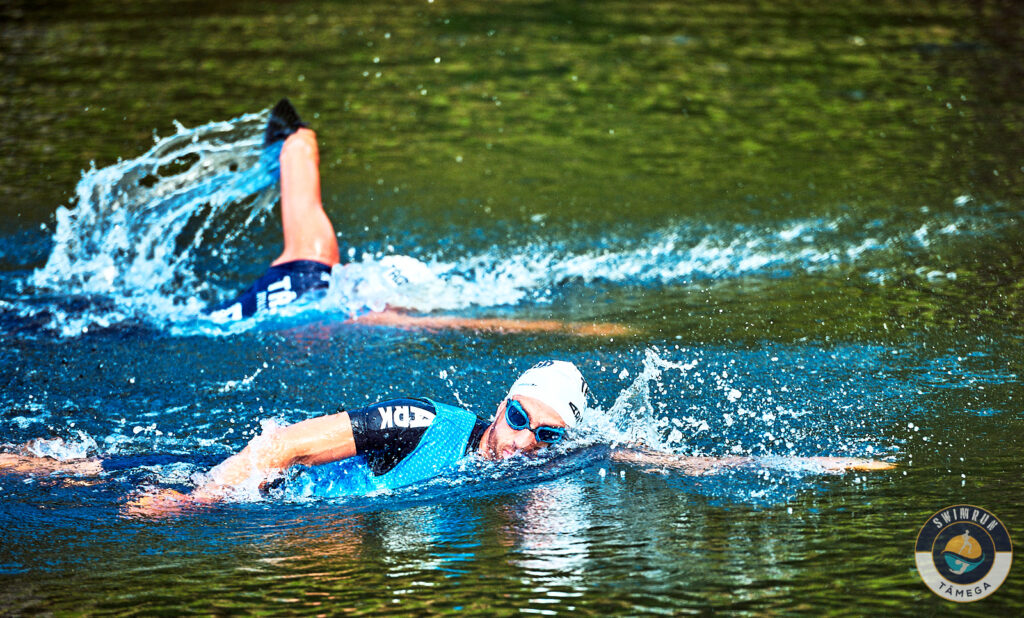
“Since the conception of Swimrun Tâmega, I have always wanted to include a youth-focused component,” revealed Sérgio Moreira. This vision led to the creation of the Swimrun Tâmega Academy, in partnership with the triathlon club Paredes Aventura. It is there that young athletes can learn the discipline through a complete and specialised training programme and develop into high-level competitors. The organiser highlights the example of Rúben, a young athlete who started three years ago and now competes in the Sprint category, having already won a silver medal.
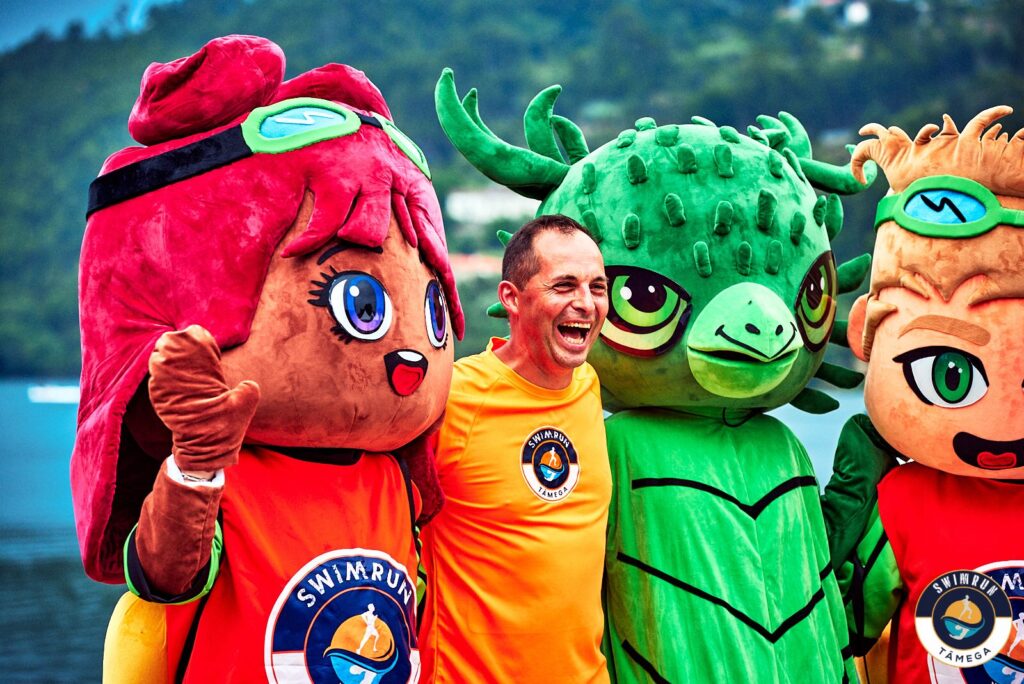
This year, nearly 30 children took part in the Swimrun event for younger participants. Beyond the competition itself, the entire atmosphere is adapted to be festive along the course: giant mascots — Tamegão, Marco and Pena — are present, and several music-related activities take place. Popcorn, of course, could not be missing.
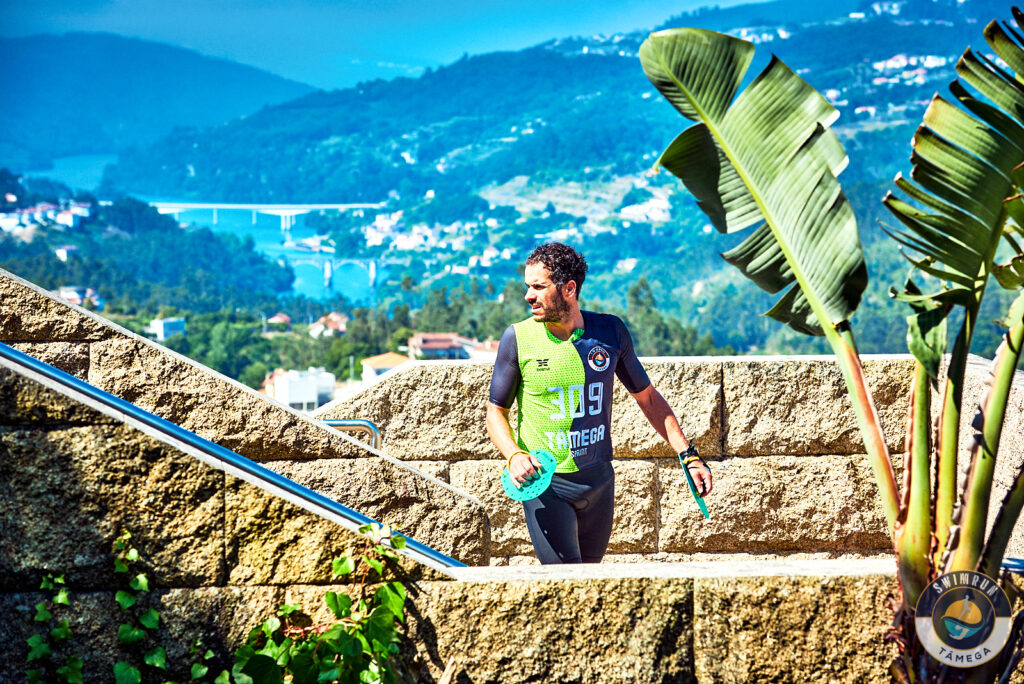
| As the name suggests, Swimrun combines a passion for swimming with the excitement of running. The races take place in the heart of nature, across magnificent landscapes, following trails that allow for a deep connection with the natural environment. It is one of the sports disciplines that emerged relatively recently, more precisely in 2006, with the race “ÖtillÖ”, which means “from island to island”. This concept originated from a bet between friends, who challenged each other to run between several islands in the Stockholm Archipelago, including sections of open-water swimming. Today, Swimrun is a global phenomenon, with more than 700 races across various European countries and over 8,000 participants. In Portugal, the first event took place in 2017 — the “Arrábida Swimrun”. |
“More autonomy, less plastic”
Swimrun Tâmega embraces an eco-friendly approach, promoting the motto “more autonomy, less plastic.” One of its core values is the protection of nature, with “a long-term vision for cleaning the river and its surroundings,” explains Sérgio Moreira. During the preparation of the course, the trails are cleaned and cleared, later being reclaimed by hikers. Over the course of three years, “several tonnes of waste were removed from the riverbanks.”
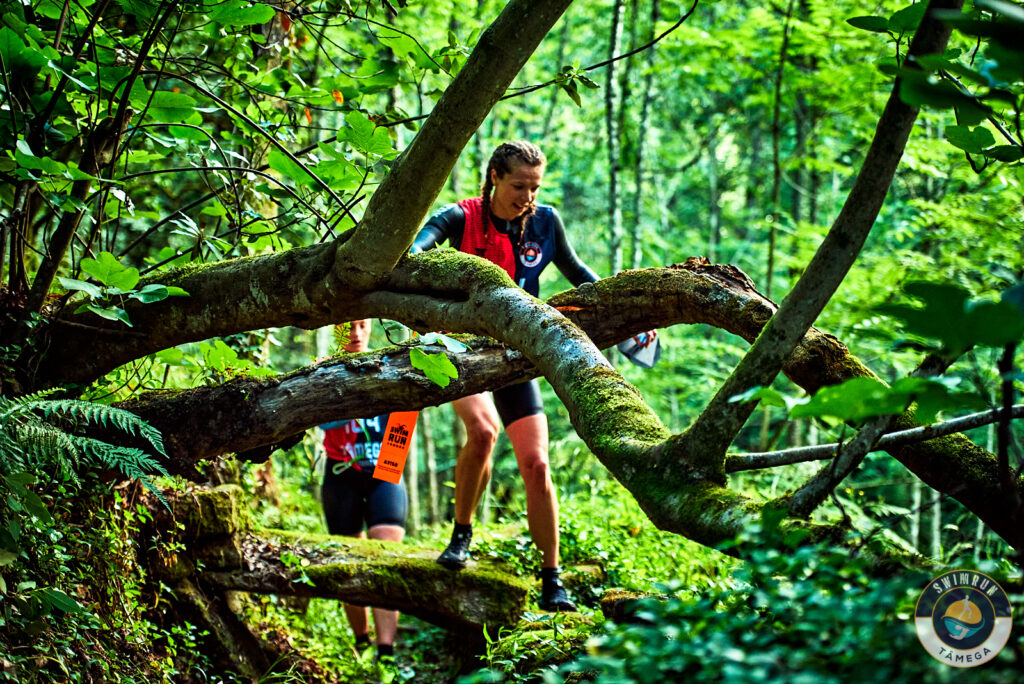
“This sport promotes respect for nature.”
The organisation also works in cooperation with the Portuguese Environment Agency and the managers of the natural reserve to preserve the flora and fauna along the course. The route also passes through private properties that are opened exclusively on race day, avoiding protected reserves while at the same time offering a unique course.
Plastic cups are prohibited, medals are made of wood, t-shirts are sourced from the local economy, and all signage in the region is biodegradable. In addition, any athlete caught littering along the trail is automatically disqualified. The goal is to minimise the ecological footprint.
Internationalisation and Innovation
Swimrun Tâmega has been growing internationally and has recently received confirmation that the “ÖtillÖ Merit Race” label has been renewed. This year, the competition featured the participation of several elite athletes from France, Sweden, Spain, and England. Feedback on the races has also been very positive, contributing to the major goal of making Swimrun Tâmega a global reference in the sport.
“We are optimistic about a substantial growth in the number of swimrunners next year,” states the organiser.
He also adds that the event may welcome up to 300 participants in 2024, creating an “exciting clash between Portuguese talent and the world elite of Swimrun.”
| Identity Characteristics of the Swimrun Tâmega Event
1. Nature 2. Inclusivity 3. Experience 4. Community |
The growing reputation of the event may attract athletes from other disciplines, such as open-water swimming, trail running, and triathlon. The organisation is dedicated to creating courses that suit different skills and interests, with a strong commitment to sporting diversity. Innovation has always been a central element of the event, and 2024 will be no exception. Sérgio Moreira revealed that on World Children’s Day, 1 June, there will be a major surprise that will “delight both children and adults.”
The event’s guiding motto remains present in all its actions:
“Swimrun Tâmega, more than a race, an experience that brings together challenge, self-improvement, and joy, and welcomes all lovers of sport and adventure.”
Swimrun Tâmega aims to continuously raise the standard of its competition while providing an unforgettable experience for all athletes.